
Published: Jun 25,2026
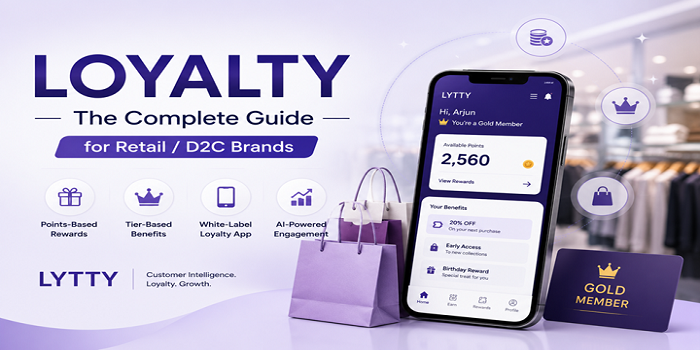
In an era where retail competition is fiercer than ever, the difference between a one-time buyer and a loyal brand advocate can define the long-term profitability of your business. Acquiring a new customer costs anywhere from five to seven times more than retaining an existing one — yet most retailers still invest disproportionately in acquisition while underinvesting in the systems that keep customers coming back.
The solution is not simply offering discounts. The most successful retailers globally have shifted toward structured loyalty programs that reward behaviour, personalise engagement, and surface actionable intelligence that shapes every future interaction. When loyalty is built on data — not just points — it becomes a strategic growth engine.
At LYTTY, we work with retailers across fashion, food, pharmacy, jewellery, and D2C categories to design and deploy loyalty programs that do exactly this. This guide explains the core types of loyalty programs, how AI is reshaping what is possible, and how retailers of any size can get started.
Customer loyalty is not just a feel-good metric. It is a financial lever. Studies consistently show that a 5% improvement in customer retention can increase profitability by 25% to 95%. Loyal customers spend more per transaction, visit more frequently, and are far more likely to refer new customers through word of mouth.
Beyond the economics, the retail landscape itself has made loyalty programs structurally necessary. With the proliferation of e-commerce options and increasing price sensitivity, customers face more choices than ever before. A loyalty program creates switching costs — not coercive ones, but emotional and transactional ties that make staying with a brand the natural choice.
Modern loyalty programs serve a dual purpose: they reward your customers and generate the behavioural data that powers smarter, more personalised engagement. When designed correctly, a loyalty program becomes the foundation of your entire customer intelligence infrastructure.
If you are looking for a fast summary before diving into the detail:
The right model depends on your retail category, average transaction frequency, and the customer journey you want to create. Read on for a full breakdown.
Points-based loyalty programs are the most widely adopted model in retail globally, and for good reason. The mechanism is elegantly simple: customers earn points for every purchase, and those points accumulate toward a reward. This model is intuitive, easy to communicate, and works across virtually every retail category.
A customer spends a defined amount — say, ?100 — and earns a corresponding number of points, say 10. Once they accumulate 500 points, they can redeem them for a ?50 discount, a free product, or an exclusive experience. The ratio of earn-to-redeem can be calibrated to your margin structure.
Points programs work particularly well in pharmacy, grocery, F&B, and everyday fashion retail, where purchase frequency is high and basket sizes are relatively consistent. Retailers such as pharmacy chains and coffee shops have used points programs to increase repeat visit rates by 30% to 50% within the first year of deployment.
Tier-based loyalty programs add a layer of status and aspiration to the loyalty equation. Rather than simply accumulating points, customers progress through named levels — typically Bronze, Silver, and Gold — with each tier unlocking progressively better benefits.
The psychology behind tier-based programs is powerful. Status is a fundamental human motivator. When customers know that reaching the next tier unlocks early access to new collections, priority customer service, or exclusive invitations to events, they become actively engaged in managing their spending to reach or maintain their status.
Tier programs are particularly effective in jewellery, premium fashion, and lifestyle retail, where purchase frequency may be lower but average order values are high. A customer who spends ?50,000 on jewellery annually deserves a different kind of recognition than a casual buyer — and tier programs deliver exactly that differentiation.
The most sophisticated retailers have moved beyond the binary choice between points and tiers. Hybrid loyalty programs combine both models with personalised, data-driven campaigns that respond to where each customer is in their lifecycle.
In a hybrid program, a customer might earn points on every purchase, progress through tiers based on cumulative annual spend, and simultaneously receive personalised WhatsApp messages or email offers triggered by their specific purchase behaviour — a restock reminder for a product they buy regularly, an exclusive tier upgrade offer when they are close to the next level, or a win-back campaign if they have been inactive for 60 days.
This is where AI changes the game entirely. Without machine intelligence, personalisation at scale is impossible. With it, every customer interaction can be contextually relevant, timely, and commercially optimised.
LYTTY is not a traditional loyalty tool. It is a retail customer intelligence and engagement platform that places loyalty at the centre of a much broader data and automation stack. Here is what that means in practice.
Every customer who interacts with your loyalty program generates a rich profile inside LYTTY’s Customer 360 module. This profile aggregates purchase history, category preferences, visit frequency, average spend, and lifecycle stage into a single unified view. Your team can see at a glance who your most valuable customers are, which segments are at risk of churning, and which recently acquired customers are showing signs of becoming loyal regulars.
LYTTY uses RFM analysis — Recency, Frequency, and Monetary value — to score every customer and assign them to lifecycle states: NEW, GROWING, LOYAL, AT_RISK, CHURNED, and RECOVERED. These states drive automated campaign logic, ensuring that the right message reaches the right customer at the right moment.
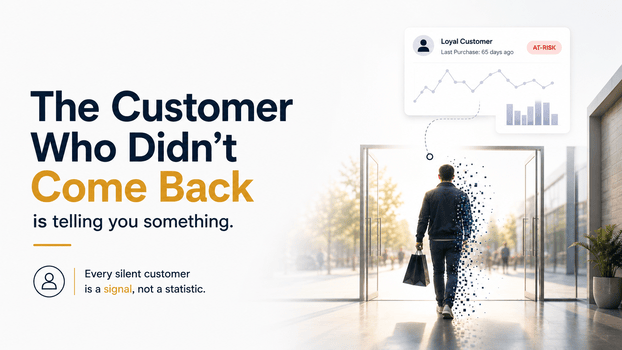
A customer who was LOYAL six months ago but has not visited in 90 days is automatically flagged as AT_RISK, triggering a personalised win-back campaign via WhatsApp or email. A NEW customer who has made three purchases in their first month is identified as a high-potential GROWING account, triggering an onboarding campaign to deepen the relationship.
LYTTY integrates with the WhatsApp Business API to deliver personalised loyalty communications directly to your customers’ most-used messaging channel. Birthday rewards, tier upgrade notifications, redemption reminders, and restock alerts are all automated — reducing manual effort while dramatically improving engagement rates compared to traditional SMS or email.
LYTTY’s signal engine tracks each customer’s category affinity — identifying whether they prefer kurtas over sarees, skincare over cosmetics, or protein supplements over general wellness products. This intelligence powers personalised offer logic that dramatically improves redemption rates and perceived value.
Retailers using LYTTY have seen repeat purchase rates improve by up to 50%, with measurable increases in average basket size and overall customer lifetime value.
One of the most significant barriers to loyalty program success is the branded experience. Customers do not want to download yet another generic loyalty app. They want to engage with your brand — your logo, your colours, your language.
LYTTY provides a fully white-labelled mobile loyalty application that presents your brand identity to your customers while LYTTY powers every element of the technology behind the scenes. Your customers see “Paragon Rewards” or “Jayalakshmi Loyalty” — not LYTTY. This approach builds brand equity with every interaction, while ensuring you benefit from an enterprise-grade loyalty platform without the need to build or maintain the technology yourself.
The app includes points tracking, tier status display, offer redemption, campaign notifications, and purchase history — all under your brand umbrella. For multi-brand retailers, LYTTY supports brand grouping, allowing customers to earn and redeem points across your portfolio of stores or formats.
Use this quick reference to identify the recommended loyalty model for your retail category:
|
Business Type |
Recommended Loyalty Model |
Key Benefit |
|---|---|---|
|
Fashion Retail |
Tier + Points |
Rewards high spenders, builds brand status |
|
Restaurant / Café |
Points |
Drives repeat visits and referra |
|
Pharmacy |
Points |
Encourages routine purchases and health journeys |
|
Jewellery |
Tier |
Creates aspirational exclusivity |
|
D2C Brand |
Hybrid |
Personalised lifecycle engagement at scale |
|
Supermarket |
Points + Cashback |
Rewards basket size and frequency |
These are starting recommendations. The right architecture for your business will depend on your specific customer base, average transaction value, and competitive context. LYTTY’s implementation team works with each retailer to design a loyalty program structure that fits your commercial objectives.
The most common mistake retailers make is launching a loyalty program without a clear data strategy. A loyalty program is only as valuable as the insights it generates. Before deploying any program, define:
LYTTY’s platform is designed to be operational within weeks, not months. With pre-built integrations, a configurable loyalty engine, and a white-label mobile app, your program can be live and generating data before your next peak season.
For most retailers, a hybrid loyalty program that combines points with tier progression and personalised campaign automation delivers the best results. It rewards purchase frequency, incentivises higher spending, and allows you to engage customers contextually throughout their lifecycle. The specific structure should be tailored to your retail category and customer base.
Yes, significantly. Retailers using structured loyalty programs with mobile app engagement consistently see higher repeat purchase rates, increased visit frequency, and stronger brand recall. LYTTY clients have reported repeat purchase improvements of up to 50% following loyalty program deployment, driven by the combination of rewards, personalisation, and automated engagement.
Building a loyalty app from scratch is expensive, time-consuming, and technically complex. A white-label platform like LYTTY gives you enterprise-grade technology under your own brand, at a fraction of the cost and timeline. You get full brand ownership of the customer experience while benefiting from continuous platform improvements, security updates, and new feature releases.
AI enables personalisation at scale. Instead of sending the same offer to every customer, an AI-powered loyalty platform like LYTTY analyses each customer’s purchase history, lifecycle stage, and category preferences to deliver contextually relevant messages and offers. This dramatically improves engagement rates, redemption rates, and the overall return on your loyalty investment.
RFM stands for Recency, Frequency, and Monetary value. It is a customer segmentation framework that scores each customer based on how recently they purchased, how often they purchase, and how much they spend. RFM scoring allows retailers to identify their most valuable customers, detect at-risk accounts before they churn, and design targeted campaigns for each customer segment.
Yes. LYTTY is designed for retailers of all sizes, from single-store businesses to multi-brand retail groups. The platform’s modular architecture means you can start with a focused loyalty program and expand to the full suite of AI-driven customer intelligence tools as your business grows.
The era of the simple punch card is over. Modern retail loyalty is about creating intelligent, personalised, data-driven relationships with your customers — relationships that make them feel valued, understood, and engaged with your brand at every touchpoint.
Points programs, tier-based rewards, and hybrid models each have a role to play. But the real competitive advantage comes from the intelligence layer underneath: the RFM scoring, the Customer 360 profiles, the category affinity signals, and the automated campaigns that turn data into revenue.
LYTTY brings all of this together in a single platform, purpose-built for retail. Whether you are a fashion house, a pharmacy chain, a jewellery brand, or a D2C business looking to deepen customer relationships, LYTTY gives you the tools to build loyalty that drives measurable, sustainable repeat revenue.
Ready to see LYTTY in action? Visit https://lytty.com/ to request a demo or speak with our team about your loyalty program requirements.
Tags: loyalty programs for retailers, points-based loyalty, tier-based rewards, white-label loyalty app, customer retention, repeat purchase, RFM analysis, AI-driven engagement, Customer 360, LYTTY

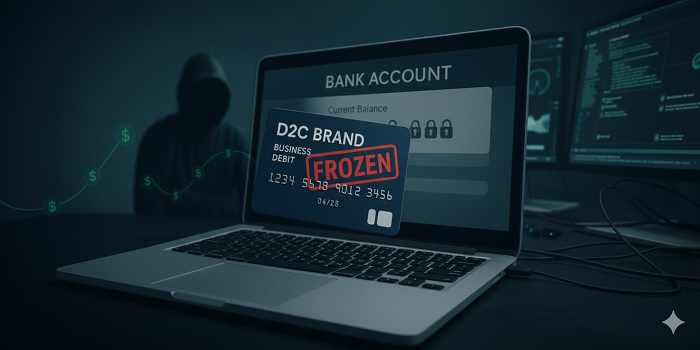
Download the D2C Bank Account Freeze Survival Checklist (Free PDF) and get practical steps to protect your bank account freezes caused by fraudulent transactions.
Thank You! Your Freeze Survival Checklist is on its way
While you're here, don't stop at prevention - learn how leading D2C brands are using LYTTY to :
Or